Etherscan is a Transaction Workbench for Gas and Contract Records
Etherscan is a transaction workbench for reading Ethereum gas conditions, wallet activity, token movement, and verified smart contract records. It turns raw Ethereum data into searchable pages for transaction hashes, addresses, blocks, tokens, NFTs, internal calls, and contract source code. The strongest use is practical investigation: checking what happened, how much ETH paid for execution, which contract received the call, and whether published code matches deployed bytecode.
This angle matters because most people arrive after an action has already happened. A wallet shows a pending transfer, a DeFi interface reports a failed swap, or a token approval needs review. A practical session on Etherscan starts with the evidence the user already has: a transaction hash, an address, an ENS name, or a contract address. From there, the page becomes a ledger view of execution rather than a marketing interface for a protocol.
Reading an Etherscan transaction page after a wallet action
A transaction page answers five immediate questions: status, block, sender, recipient, and cost. Status tells whether Ethereum included and executed the transaction. The block number anchors it in chain history. From and To identify the externally owned account or contract involved. The value field shows ETH moved directly, while token transfer rows reveal ERC-20, ERC-721, or ERC-1155 movements triggered by the same transaction.
Gas data deserves a separate look. Ethereum transactions consume gas units, pay fees in ETH, and display prices in Gwei. Under EIP-1559, the base fee is burned and the priority fee rewards the validator. A failed transaction still pays for computation already attempted, so a red status does not mean the wallet keeps every bit of the fee. Input data, event logs, and internal transactions explain why the result differs from the wallet summary.
Gas tracker fields that matter before sending ETH
The gas tracker in Etherscan organizes the live fee market into speed bands such as Standard, Fast, and Rapid, with base fee and priority fee separated. Those bands translate network demand into a usable estimate before signing a swap, NFT mint, bridge deposit, or lending transaction. The tracker also shows pending queue pressure, historical gas oracle prices, and action-cost estimates, which makes it easier to delay nonurgent activity during congested periods.
Gas guzzlers and gas spenders add context that a single Gwei number misses. A popular stablecoin contract, NFT marketplace, account abstraction entry point, or router contract changes demand for block space. Seeing which contracts consume large shares of recent gas helps explain sudden fee spikes without guessing from price charts or social posts.
Verified contract records turn bytecode into something readable
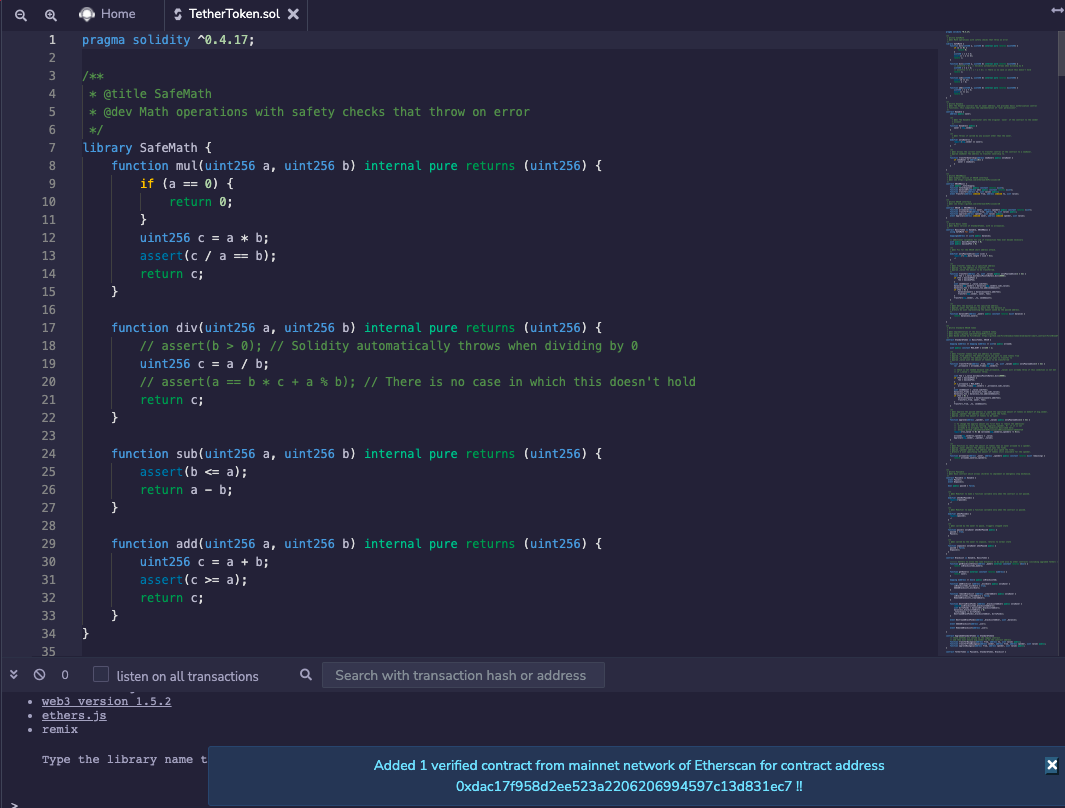
Ethereum stores bytecode, not a friendly project manual. On Etherscan, verified contracts connect that deployed bytecode to source files, compiler settings, constructor arguments, ABI records, and contract metadata. This matters for tokens, staking contracts, routers, proxies, NFT collections, and governance modules. The Read Contract and Write Contract tabs expose callable functions through the ABI, while events and logs show what the contract emitted during execution.
Proxy contracts require extra attention because the visible address delegates logic to an implementation contract. Explorer pages flag many proxy patterns and provide separate views for the proxy and implementation. When a contract uses Solidity, Vyper, or a flattened source file, the verified record gives developers and auditors a direct route from an address to the code that handles balances, allowances, roles, upgrades, or withdrawals.
From search box to address history
The fastest workflow is search first, filter second. Paste a wallet address, contract address, ENS name, transaction hash, or block number. Once the address page loads, the normal transaction list shows direct ETH activity, while token transfer tabs separate ERC-20 movements from NFT transfers. Internal transactions capture value movement created by contract execution, including refunds, payouts, or calls that do not appear as simple wallet-to-wallet transfers.
Address labels, private notes, and name tags improve repeat visits. Etherscan labels well-known exchange wallets, token contracts, phishing reports, MEV bots, bridges, and protocol routers when the explorer has attribution. Personal notes belong to the signed-in user and are useful for tracking invoices, treasury movements, grant payments, or test deployments. Private notes are a poor place for secrets; never store seed phrases or private keys in an explorer account.
Token approvals and allowance checks before a new trade
An approval grants a smart contract permission to move a token from a wallet up to a specified allowance. This is normal for ERC-20 swaps, lending markets, staking contracts, and many NFT approvals, yet old unlimited permissions accumulate across years of usage. The token approval view groups allowances by wallet, token, spender, and chain so stale router permissions stand out.
Revoking approval sends a new blockchain transaction, so it costs gas. The decision is operational: keep active permissions for contracts still in use, remove permissions for abandoned apps, and review unfamiliar spenders before moving large balances. Allowance reviews also reveal confusing token names, fake airdrop bait, and contracts that received broad access during rushed minting or swapping sessions.
Broadcasting, decoding, and exporting records
A signed transaction broadcast through Etherscan is useful when a wallet or RPC endpoint stalls after signing. The raw signed payload already contains the sender, nonce, gas settings, destination, value, and calldata, so broadcasting it submits the same intent to Ethereum without exposing the private key. Input Data Decoder and related tools translate calldata into function names and parameters when the ABI is available.
CSV export supports accounting, reconciliation, and research. A wallet history exported by date range gives analysts a spreadsheet-friendly view of transaction hashes, timestamps, values, gas paid, and token movements. Developers use similar records to compare contract events with backend logs, investigate failed jobs, or reconstruct a sequence around a liquidation, mint, claim, or bridge settlement.
Where the API fits into monitoring and research
Etherscan API V2 gives builders a structured way to fetch account transactions, token transfers, blocks, logs, contract ABIs, gas data, and name tags. The newer API model uses a single account and key system across many EVM-compatible chains, with a chain identifier selecting Ethereum, Base, Arbitrum, BNB Smart Chain, and other supported networks. That design is useful for dashboards tracking USDC, USDT, PYUSD, contract deployments, or address portfolios across several chains.
Rate limits and endpoint choice shape reliability. A backend that polls every address through a generic transaction endpoint wastes quota and misses contract-specific details. Better monitoring starts from the event model: ERC-20 Transfer logs for token movement, contract endpoints for ABI lookups, gas endpoints for fee estimates, and advanced filters when the query needs block ranges, addresses, or token standards.

Blockscout, wallet histories, and analytics dashboards
Different tools answer different parts of the same investigation. Blockscout is an open-source explorer used by many EVM networks and works well when a chain adopts it as the default public explorer. Wallet activity pages in MetaMask, Rabby, Ledger Live, and Coinbase Wallet are convenient for the owner of an address, especially during signing and portfolio review. Dune and Flipside turn on-chain data into SQL-driven dashboards for repeated analysis.
Typically, Etherscan remains the familiar reference point for Ethereum mainnet because its pages combine transaction lookup, verified source, gas tracking, labels, contract interaction, token pages, charts, and developer utilities in one place. The best choice depends on the task: use a wallet for signing, a block explorer for evidence, an analytics platform for aggregate questions, and an RPC or indexed database when an application needs its own data pipeline.
Etherscan: questions and answers
Does Etherscan show pending transactions before they confirm?
Yes. Pending transaction views display transactions that have been broadcast to Ethereum but not yet included in a block. A pending page shows the nonce, gas settings, sender, destination, and available calldata, which helps diagnose stuck activity. If the gas price is too low for current demand, the transaction waits until it is replaced, canceled, dropped, or eventually included.
Gas fees on Etherscan look different from my wallet estimate. Why?
Wallets estimate fees at signing time, while the explorer displays network conditions and final execution data after broadcast or confirmation. Base fee, priority fee, gas limit, and actual gas used all affect the final ETH cost. A complex swap, bridge call, or contract interaction also uses more gas units than a simple ETH transfer.
Which token standards are easiest to trace in explorer records?
ERC-20 transfers, ERC-721 NFT transfers, and ERC-1155 multi-token transfers are the easiest to trace because they emit standardized events. Explorer tabs separate these movements from ordinary ETH transfers, which makes wallet histories easier to read. Custom contracts without standard events require deeper log inspection, ABI decoding, or project-specific indexing.
Can I use the contract Write tab without a developer tool?
Yes, when the contract is verified and the ABI is available, the Write tab exposes callable functions in a browser form. The wallet still signs the transaction, and Ethereum still charges gas. This route suits advanced users who understand the function, parameters, token units, and address fields, because a mistaken call executes like any other signed transaction.