Etherscan is the public search layer for Ethereum transactions and verified contracts
Etherscan is a public Ethereum block explorer that turns addresses, transaction hashes, token contracts, NFT collections, and verified Solidity source code into searchable records. It is the place people use to confirm whether ETH moved, inspect what a wallet has done, read a smart contract, estimate current gas conditions, and trace token activity across the Ethereum ledger.
Reading a transaction hash from status to gas
A transaction hash is the cleanest entry point when someone wants to know what happened on Ethereum. On Etherscan , a transaction page shows the status, block number, timestamp, sender, recipient, nonce, value, and execution details that sit behind a wallet notification. Successful transfers, reverted contract calls, token swaps, NFT mints, and contract deployments all resolve into this same transaction-level view.
The fee area follows Ethereum's EIP-1559 model. It separates gas limit, gas used, base fee, priority fee, and total transaction fee paid in ETH. That breakdown matters because a simple ETH transfer uses far less gas than a complex DeFi interaction, even when the visible transfer amount is small. Reading those fields explains why two actions submitted minutes apart produced different costs.
Wallet pages expose balances, token transfers, and approvals
An address page reads like an activity statement for a public Ethereum account. Search on Etherscan accepts a wallet address or ENS name, then opens tabs for normal transactions, internal transactions, ERC-20 transfers, ERC-721 transfers, ERC-1155 transfers, analytics, and related contract activity. The ETH balance appears alongside token holdings, while historical transfers show which contracts touched the address over time.
Token approvals deserve a separate look because they control which smart contracts have permission to move tokens from a wallet. The token approval checker shows allowances connected to DeFi apps, NFT marketplaces, and older contracts. A fake token transfer in an address history is a common lure; trust the contract address and token page rather than the token name alone.
Verified contracts turn bytecode into readable methods
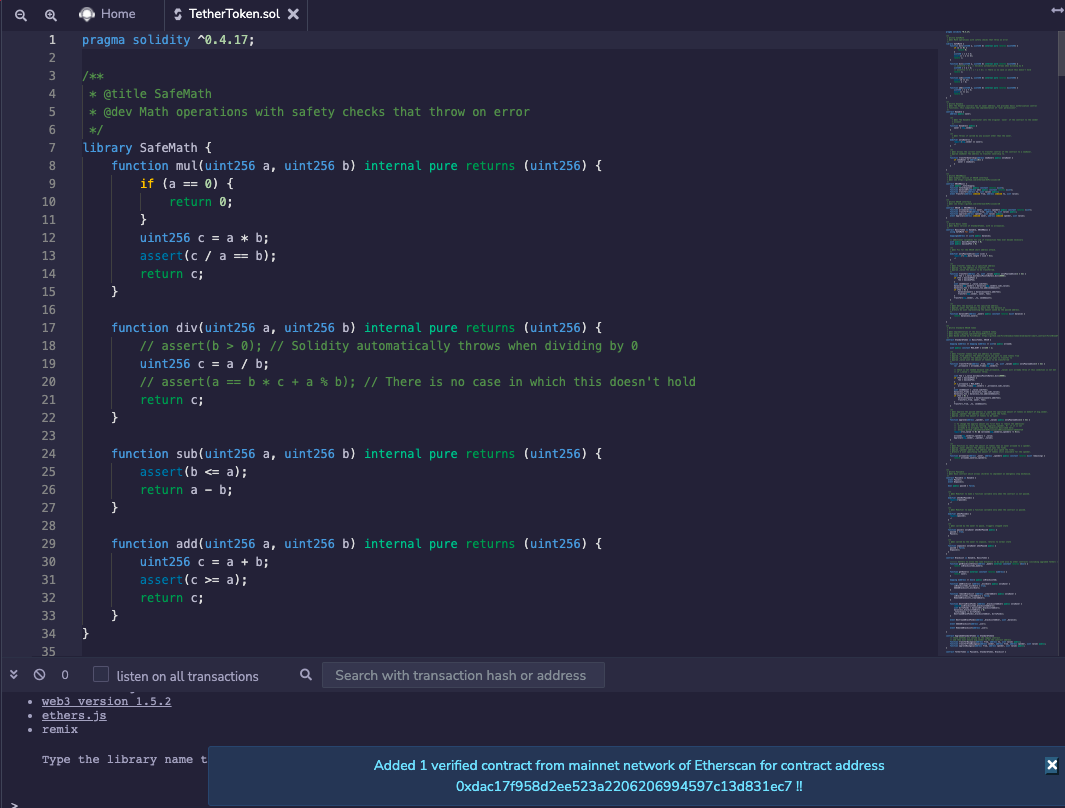
Raw EVM bytecode is hard to audit at a glance. Verified source code is what makes Etherscan especially useful for Ethereum developers and power users: the contract page links deployed bytecode to readable Solidity or Vyper source, compiler settings, ABI data, constructor arguments, and contract creation details. That record helps people distinguish a transparent deployment from an opaque address that only exposes machine code.
Read Contract and Write Contract panels bring the ABI into a browser interface. Read calls return public values without submitting a transaction, such as token supply, ownership fields, or vault parameters. Write calls prepare state-changing interactions through a connected wallet. Contract pages also show event logs, holder distributions, proxy relationships, library references, and the deployment transaction that created the address.
Gas, blocks, and Ethereum network rhythm
Ethereum fees move with block demand. The gas tracker summarizes current base fee conditions, suggested priority fees, and recent block activity so a user understands the cost of submitting a transaction now rather than later. Because Etherscan indexes blocks as they arrive, the explorer also shows transactions packed into each block, the validator recipient for execution rewards, burned ETH, and withdrawals related to staking activity.
Block pages add context that a wallet screen omits. They show gas used against the block gas limit, transaction count, timestamp, and fee burn data. When congestion rises around a popular mint, token launch, liquidation wave, or market event, those pages reveal the underlying pressure instead of reducing the moment to a single gas number.
A first lookup workflow for a new ETH user
Start with one concrete item: a transaction hash from a wallet, an address copied from a counterparty, or a token contract address. Paste it into the search field, confirm that the result type matches the item, then read the page from top to bottom before acting on it. The most useful early checks are simple:
- Confirm transaction status before assuming funds arrived.
- Match the recipient address exactly, including the first and last characters.
- Review token contract pages before trusting a token name or symbol.
- Open event logs when a DeFi action includes several internal steps.
- Check approvals after interacting with unfamiliar contracts.
This workflow turns the explorer into a verification habit. It also makes wallet pop-ups easier to interpret because the same contract names, token standards, gas fields, and addresses appear again in a permanent public record.
Token pages, ENS names, and labels add context
Because Etherscan indexes token contracts, a token page gathers supply information, holders, transfers, contract details, and links to the verified code when available. ERC-20 pages focus on fungible balances and transfers. ERC-721 and ERC-1155 views make NFT movement visible through collection contracts, token IDs, ownership changes, and minting or transfer events.
Name tags, labels, and ENS names reduce ambiguity around well-known addresses. Exchange wallets, major contracts, burn addresses, bridges, and protocol treasuries become easier to recognize when the page includes a public label. Labels add context; they do not replace address matching. A serious transfer still deserves a full address check before submission.
Contract teams and analysts use the API after deployment
Developers use Etherscan after deployment to publish source code, retrieve ABI data, automate contract verification, and pull indexed Ethereum records into dashboards or monitoring systems. The API exposes account activity, transaction lists, token transfers, contract data, logs, gas information, and block details. That saves teams from running every indexing job from a raw node when they need ordinary explorer-style data.
Analysts use the same indexed records to trace flows between wallets, study token holder changes, monitor treasury transactions, and inspect contract calls around market events. One Etherscan strength is consistency: the browser pages and API describe the same underlying ledger, so a manual investigation and a programmatic query reconcile around the same transaction hash, block, and address.

Risks that show up in public Ethereum records
Public data is exact, but interpretation still matters. Failed transactions pay gas because validators included the attempted execution in a block. Address poisoning inserts lookalike addresses into history. Scam tokens create unsolicited transfers that make a wallet page look busier than it is. Proxy contracts separate the visible proxy address from the implementation logic, which means both pages matter when reviewing code.
Every record is public by design, so repeated transfers, ENS names, NFT holdings, and DeFi positions reveal patterns. Users who reuse one address for everything create a cleaner trail for analysis. Teams handling treasuries, payroll, grants, or high-value operations treat labeling, address hygiene, and approval reviews as part of normal Ethereum operations.
Ethplorer, Blockchair, OKLink, and wallet explorers
Ethplorer gives a token-heavy view of Ethereum addresses and ERC-20 activity. Blockchair covers multiple chains with broad search and analytics. OKLink provides another multi-chain explorer interface with address and transaction views across major networks. Wallets such as MetaMask show recent activity inside the account interface, which is convenient for quick checks.
Etherscan remains the most familiar reference point for Ethereum mainnet because its verified contracts, transaction pages, gas tracker, labels, token pages, and developer tooling line up around the same chain. When a wallet alert, DeFi interface, or community discussion points to an Ethereum transaction, this explorer turns the raw hash into a readable record.
Things people ask about Etherscan
Do I need a wallet to search an Ethereum address?
No wallet connection is required to search a public Ethereum address, transaction hash, block, token contract, or ENS name. The explorer reads public blockchain data and displays it in a searchable interface. A wallet connection is only needed for actions that prepare a transaction, such as using a write-contract panel or submitting a token approval revocation.
How long does a pending Ethereum transaction appear before it confirms?
A pending transaction appears while it sits in the mempool waiting for inclusion in a block. If the gas settings are competitive, confirmation arrives quickly. If the max fee is too low during congestion, the transaction remains pending until it is replaced, dropped, or conditions change enough for validators to include it.
What happens if an Ethereum transaction fails after submission?
A failed transaction still becomes part of Ethereum history once a validator includes it in a block. The wallet pays gas for the attempted execution, but the intended state change does not complete. The transaction page shows a failed status and usually includes error context, logs, or contract-call details that help explain where execution reverted.
Can I use Etherscan to revoke token approvals?
Yes. The token approval checker lists contracts with permission to spend tokens from a connected wallet, and it prepares revocation transactions for selected allowances. Each revocation is an Ethereum transaction, so it requires wallet confirmation and gas paid in ETH. Reviewing allowances is especially useful after using unfamiliar DeFi apps, NFT marketplaces, or older contracts.
Which Ethereum identifiers work in the search box?
The search box accepts transaction hashes, wallet addresses, contract addresses, block numbers, token names, token symbols, and ENS names. A contract address gives the most precise result for token checks because names and tickers are not unique. When several results look similar, the contract address is the reliable identifier to compare.
Is an API key required for automated Ethereum data queries?
API access uses keys for authenticated requests, rate tracking, and application management. Developers use the API for account history, token transfers, contract ABIs, event logs, gas data, and verification workflows. Browser searches do not require an API key, but production dashboards, bots, and monitoring tools should use authenticated API calls.
Does an address page reveal who owns the wallet?
An address page reveals on-chain activity tied to that address, not the legal identity of the owner. Labels and ENS names sometimes connect an address to a known exchange, protocol, project treasury, or public account. Unlabeled personal wallets remain pseudonymous unless the owner links the address elsewhere or activity patterns make attribution clear.